
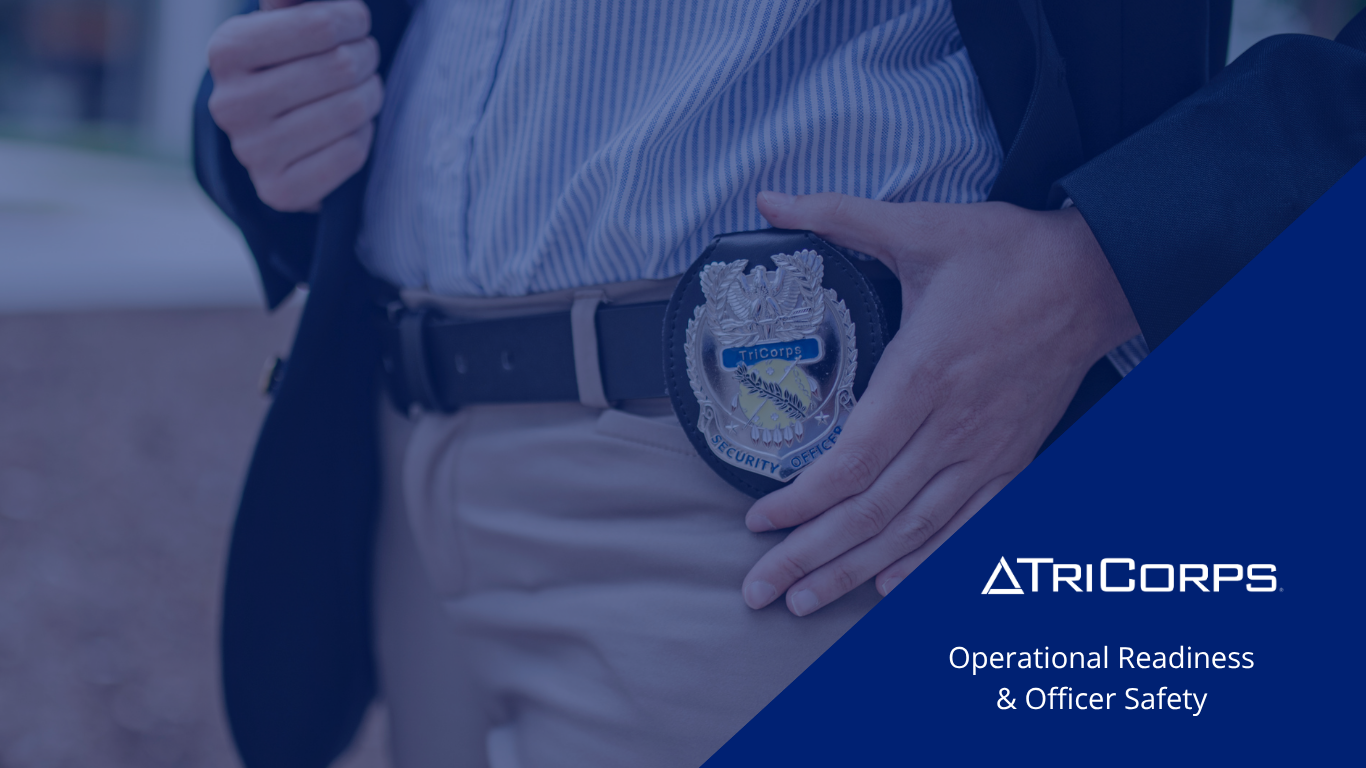
Every officer deserves to return home safely at the end of each shift. Operational readiness plays a critical role in making that possible. Arriving prepared, maintaining situational awareness, and following established procedures help protect our officers, clients, and the communities we serve.
These expectations apply to all TriCorps Security officers, both armed and unarmed, across every assignment. Officers must always follow applicable laws, company policies, training requirements, and site-specific post orders.
Before Your Shift
- Be fit for duty. Arrive well-rested and prepared to perform your responsibilities. If illness, fatigue, or medication may affect your ability to work safely, notify your supervisor before beginning your shift.
- Maintain current credentials. Ensure all required licenses, identification, certifications, and firearm permits are valid and available as required by applicable regulations.
- Inspect your equipment. Confirm that your radio is charged and functioning, your flashlight is operational, and your uniform is clean and complete. Report missing, damaged, or malfunctioning equipment immediately.
- Armed officers: Inspect your firearm, holster, and ammunition in accordance with company policy and approved safety procedures. Never carry a firearm for which you are not currently authorized and qualified.
- Know your assignment. Review your post orders, pass-down logs, emergency procedures, and contact information. Familiarize yourself with emergency exits, evacuation routes, and reporting expectations.
While on Post
- Maintain situational awareness. Stay focused on your surroundings and avoid unnecessary distractions, including personal phone use. Pay attention to unusual activity and potential safety concerns.
- Conduct effective patrols. Follow established patrol procedures and vary routes or timing when permitted by post orders. Remain attentive to changes in your environment.
- Maintain communication. Complete required check-ins and promptly notify your supervisor of any communication issues or safety concerns. Missed check-ins may initiate established emergency response procedures.
- Practice safe positioning. Maintain appropriate distance when interacting with individuals, remain aware of available exits, and avoid placing yourself in unnecessarily vulnerable situations.
Use of Force and Firearm Safety
- Prioritize observation, deterrence, and reporting. Security officers should focus on identifying potential threats, preventing incidents, and documenting concerns. Any use of force must comply with applicable law, company policy, and the officer’s authorized training.
- Armed officers: Always follow fundamental firearm safety practices. Treat every firearm as loaded, maintain proper muzzle discipline, and keep your finger off the trigger unless lawfully preparing to fire. Drawing or using a firearm must be justified under applicable law and company policy. Never handle or display a firearm unnecessarily.
- Unarmed officers: Never carry or use weapons you are not authorized to possess while on duty. Focus on observation, communication, de-escalation, and timely reporting.
Responding to Incidents and Emergencies
- Prioritize safety. For immediate threats to life or serious emergencies, contact 911 as soon as it is safe to do so, then notify your supervisor in accordance with established procedures.
- Use de-escalation techniques. When safe and appropriate, maintain a calm tone, use nonthreatening body language, keep a safe distance, and listen carefully to those involved.
- Know when to request assistance. Do not unnecessarily place yourself or others at risk. When a situation exceeds your authority, training, or available resources, request assistance from your supervisor, backup personnel, or law enforcement.
- Document incidents accurately. Complete required incident reports promptly and in accordance with company and site procedures. Include relevant facts such as who was involved, what occurred, when and where the incident took place, and what actions were taken. Accurate documentation supports accountability, communication, and follow-up.
The Bottom Line
Operational readiness begins before an officer arrives on post and continues throughout every shift. Staying prepared, remaining alert, communicating effectively, and following established procedures are essential to protecting yourself and those around you.
When faced with uncertainty, prioritize safety, follow your training, and seek assistance when necessary.
Remember: A prepared officer is a safer officer.
For questions regarding operational readiness expectations or site-specific procedures, contact your supervisor.
